
ADESA
ADESA USAuto & Vehicles
3.668.00 Reviews
- Version
- 3.1.56
- Installs
- 50.00K
- Age Rating
- Everyone
Screenshots
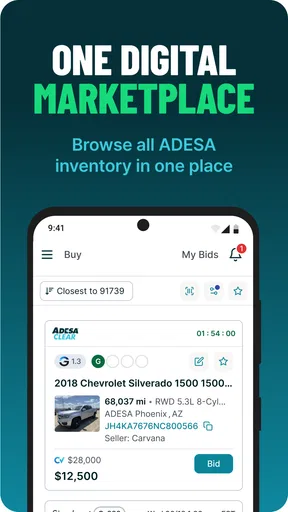
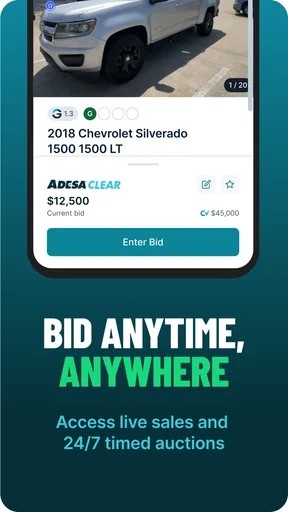
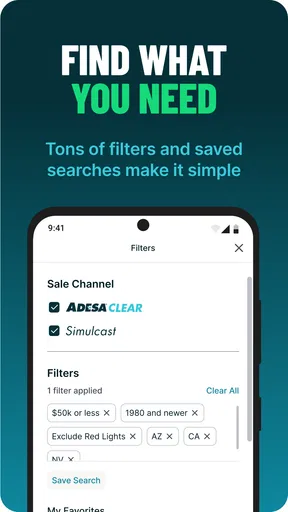
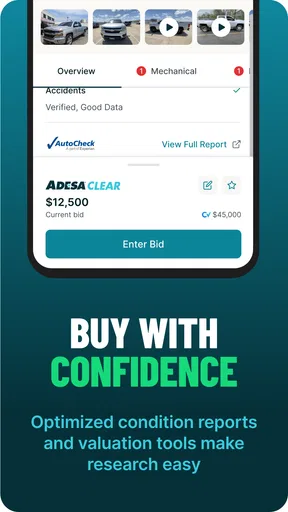
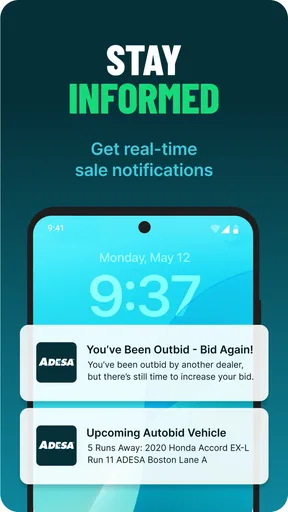
Our Review of ADESA
 Analysis by Appyee
Buying a vehicle at auction is very different from browsing a normal shopping app. You are not simply comparing a few polished listings and tapping a purchase button; you are weighing timing, condition, bidding discipline, and the needs of the person who will eventually drive or manage the vehicle. ADESA is built for that more focused process. Developed by ADESA US, this free Auto & Vehicles app gives me a mobile way to approach auction buying rather than relying entirely on a desktop browser or a chain of messages between people.
After spending time with it, I see the app as most useful for dealers, automotive professionals, and households where one person handles vehicle sourcing while another helps with inspection, budgeting, or transport. Its central appeal is convenience: auction activity can be followed from a phone, which matters when a decision has to be made away from a desk. At the same time, the app does not remove the judgment that auction buying requires. It helps organize access to the process, but it does not turn a potentially complicated vehicle purchase into a risk-free retail transaction.
How ADESA fits into real household and shared-device use
I find ADESA most useful in a household or small team when one person researches vehicles and another helps weigh the budget, intended use, and practical follow-through. Before anyone shares a device, I’d agree on who may browse and who is authorized to act; that simple boundary keeps collaboration helpful without turning a quick check into an unintended commitment.
A practical scenario for two people sharing the buying work
Imagine a small household business where one person is responsible for finding replacement stock and another handles the budget. The buyer may review vehicles during the day, while the second person wants to discuss whether a particular bid makes sense before money is committed. A mobile auction app is helpful here because the conversation can happen around an active opportunity instead of waiting until everyone is back at a computer.
I would use ADESA in that situation as a coordination tool, not as a substitute for a shared purchasing plan. One person can identify a vehicle worth investigating, then discuss the maximum acceptable bid, likely transport needs, and the cost of any visible or suspected repairs. The important habit is to agree on those limits before bidding becomes urgent. Auction interfaces are designed for action, and a shared household can easily create confusion if two people assume the other person is only watching.
That is one of the app’s less obvious strengths: it can make the mobile part of a vehicle search more available to the people involved. The less obvious weakness is that convenience can encourage rushed decisions. If a family member opens the app on a shared phone and starts reviewing a sale without knowing the agreed budget, the technology does not solve the communication problem. I would keep a simple written record of the vehicle, the maximum bid, and who has authority to act.
What the first setup should establish
Before using ADESA seriously, I would decide whose account is being used and what that account represents. This is especially important on a household tablet or a phone that several people borrow. An auction account should not be treated like a general family profile where everyone can casually explore and act under the same identity. The person responsible for the account should be clear about who may review vehicles and who may place bids.
I also recommend separating research from authorization. A partner, employee, or family member may be perfectly capable of comparing vehicles without being the person who makes the final commitment. That boundary is useful even when everyone trusts one another, because it prevents a casual tap or misunderstanding from becoming a financial decision. ADESA can support the browsing and bidding workflow, but the household still needs to create its own rules around access.
On a shared device, I would also make a habit of checking which account is active before doing anything important. This is a small step, but it matters when more than one person uses the same phone. Do not assume that closing the app has ended the session or that the next user will understand what was left open. A quick account check, followed by a clear handoff, is more reliable than trying to reconstruct who did what afterward.
The app is free to install, which makes it easy to place alongside other vehicle research tools. That does not mean the buying process itself is free or that a displayed opportunity should be treated like a casual shopping item. I would think of the free app as an access point to auction activity, while keeping the financial decision, inspection work, and logistics in a separate household checklist.
Coordinating research without creating duplicate work
Two people can use a vehicle auction app efficiently, but only if they divide the work. I would assign one person to shortlist vehicles and record the practical details, while the other checks whether each candidate fits the intended use. For example, one person might focus on whether a vehicle is suitable for resale, while the other considers whether the repair risk makes the projected margin unrealistic.
This approach is more useful than having both people independently scroll through the same inventory. It also exposes disagreements early. If one person sees a bargain and the other sees a transport problem, that difference is worth discussing before the bidding window becomes the center of attention. The app makes it easier to stay close to the auction process, but the best results still come from a deliberate division of responsibility.
I would keep a short note for every serious candidate with four items: the intended use, the maximum total budget, the person responsible for inspection or verification, and the point at which the household will walk away. The total budget should include more than the bid itself. Transport, repairs, registration, time, and unexpected work can change the value of an apparently attractive purchase. An app can show the opportunity; it cannot calculate your personal tolerance for delays or repair bills.
Another useful habit is to avoid treating a shared shortlist as an approval list. A vehicle that looks promising on a phone screen still needs a final discussion. The person who is most comfortable with bidding may not be the person who understands the household’s cash flow or the vehicle’s intended role. Keeping those perspectives separate makes the final decision more grounded.
Age, trust, and the limits of a shared account
ADESA has an Everyone content rating, so the app is presented in a way that is broadly suitable for general audiences. That does not make auction participation appropriate for every member of a household. A younger family member might help compare vehicle types, organize notes, or learn how auctions work, but financial authority should remain with the adult responsible for the account and purchase.
This is where expectations matter. I would not hand a shared device to a child or inexperienced user and assume that the app itself will enforce the boundaries I want. The safer approach is human supervision and a clear rule: browsing can be collaborative, while bidding and account decisions belong to a designated adult or authorized professional. That distinction is especially important because the app sits in the Auto & Vehicles category, where an apparently small action can lead to a significant commitment outside the screen.
Trust also matters between adults. A household may be comfortable sharing a phone, yet still need separate responsibilities for vehicle decisions. If a partner is only meant to research, say so plainly. If an employee can bid up to a certain limit, document that limit. If a family member is helping with transport, involve that person before the purchase rather than after the vehicle has been acquired. These are not missing app features; they are sensible boundaries around a tool that makes access more convenient.
Where the mobile experience helps most
The strongest use case is staying connected to auction work when a computer is inconvenient. A dealer moving between appointments, a small business owner checking opportunities during a workday, or a household buyer comparing options from different locations can benefit from having the process available on a phone. The app’s purpose is focused enough that it feels more relevant than a general web search when the goal is auction bidding and buying.
I also like the possibility of using the app as a second opinion during a conversation. If two people are deciding whether to pursue a vehicle, having the relevant auction context close at hand is more practical than relying on memory. It can make the discussion more concrete: this is the vehicle we are considering, this is the point in the process, and this is the limit we agreed on.
Still, mobile convenience has a trade-off. A phone encourages quick checks, and quick checks can become quick bids. I would avoid making a final decision while distracted, driving, or dealing with several other tasks. A vehicle purchase deserves a calm review of the budget and condition, even when the app makes the opportunity feel immediate.
How it compares with ordinary alternatives
The usual alternative is a desktop website, a salesperson, or a general vehicle marketplace. A desktop browser may be better for long comparisons because a larger screen gives more room for notes, multiple windows, and side-by-side research. A salesperson may provide human context, though the quality and speed of that help depend on the situation. General marketplaces are often more familiar to casual buyers, but they are not designed around the same auction-focused workflow.
ADESA makes more sense when the user already understands why an auction platform is useful and wants mobile access to that process. It is less compelling for someone who simply wants a straightforward private-party purchase with a clear asking price and a simple inspection appointment. In that case, a conventional marketplace may feel easier because the buyer is not managing the same bidding pressure or auction-specific decisions.
I would also avoid comparing the app with a vehicle-history tool as though they perform the same job. A history service can help investigate a vehicle, while an auction platform helps a user participate in buying activity. In practice, serious buyers may need both an auction workflow and independent research habits. ADESA is valuable for the former, but it should not be treated as the entire due-diligence process.
Everyday friction and realistic limitations
The average rating is 3.6 from around 170 ratings, with over 50 thousand installs, which suggests a real but still relatively modest user base. I read that as a reason to keep expectations practical. The app has enough adoption to be established, yet I would not assume that every household will find the experience equally smooth or that every issue will be resolved instantly.
Its current version is 3.1.56, and it requires Android 10 or later. That requirement is reasonable for many recent phones, but it can exclude an older shared device that a family keeps for occasional use. Before making the app part of a household workflow, I would check the phone’s operating system rather than discovering the compatibility issue when an auction opportunity is already being discussed.
The more important limitation is not the installation step; it is the responsibility that remains with the user. A mobile auction app cannot inspect a vehicle for you, estimate the real repair cost from a glance, arrange every logistical detail, or decide whether a purchase fits your business. If your household does not have someone willing to perform that work, ADESA may make the search easier without making the purchase wiser.
I would also be cautious about shared notifications and open sessions. On a family phone, auction-related activity may be visible to anyone using the device. Even without inventing special privacy controls, the practical lesson is clear: use a device and account arrangement that matches the sensitivity of the purchase. A person who needs privacy around business buying should not assume that a communal tablet is the best place to manage it.
Who should use it and who should skip it
I would recommend ADESA to a dealer, automotive professional, or informed buyer who already has a reason to participate in vehicle auctions. It is also a sensible option for a household coordinating a serious purchase, provided one adult takes responsibility for the account and the group agrees on a budget before using the bidding workflow. The app is most useful when mobile access saves time without replacing careful judgment.
I would suggest skipping it if you are only browsing for a first car and do not understand auction risks, or if you want a simple fixed-price buying experience. It is also a poor fit for a household where several people may act independently on the same account. In that environment, the convenience of shared access can become a source of accidental commitments and arguments.
For a casual shopper, a general marketplace may be easier to understand. For a professional buyer, ADESA may be more relevant than a consumer shopping app because its focus is closer to auction activity. The right choice depends less on whether the app is free and more on whether the user has the knowledge, authority, and follow-through to manage what happens after a bid.
My household verdict
After using it as a mobile auction companion, I find ADESA worthwhile for people who need practical access to vehicle buying activity while away from a desktop. Its value is clearest in coordinated workflows: one person researches, another reviews the budget, and a designated account holder makes the decision. That arrangement turns the app into a useful part of a process rather than a shortcut around responsibility.
I would not recommend treating it as a family entertainment app or leaving it open for anyone to experiment with. The Everyone rating describes the general content level, not the maturity required to make an auction purchase. Clear account boundaries, adult supervision where needed, and a written spending limit are more important than simply installing the app.
My final advice is to use ADESA in three stages. First, research calmly and identify vehicles that fit a real need. Second, coordinate with the people who understand the budget, inspection, and transport questions. Third, bid only when the authorized person has confirmed the maximum total cost and is ready to accept the result. That disciplined approach is where the app earns its place.
For the right user, this is a useful mobile doorway into auction buying, not a replacement for due diligence. I would recommend it to experienced or well-prepared buyers who value access and coordination. I would steer a completely new shopper toward learning the auction process first, then returning to ADESA once the household knows who is responsible, what it can spend, and when walking away is the smartest decision.
Verdict
Strengths of ADESA
- Wide selection of vehicles from dealers, fleets, and rental companies.
- Detailed listings help compare mileage, condition, and auction information.
- Useful search filters make it easier to find suitable vehicles.
- Online bidding offers a convenient way to participate remotely.
- Vehicle auction access is available through a dedicated mobile app.
Limitations of ADESA
- Account approval may be required before bidding on vehicles.
- Auction fees and additional charges can increase the final purchase cost.
- Vehicle condition may vary, so inspections are still important.
- Some listings may be limited by location or buyer eligibility.
- Bidding deadlines can make it easy to miss a preferred vehicle.
Similar Picks in This Category
View All
Android Auto
Google LLC4.1

maxim — order a taxi & food
PT. SITO4.7

Штрафы ГИБДД: проверка с фото
Pays LLC – Штрафы ГИБДД4.7

Номерограм – проверка авто
Авто Ассист4.8

Дром Авто
Дром4.9

Frequently Asked Questions
What is ADESA and what can I use it for?
ADESA is an online vehicle auction platform designed mainly for automotive dealers and other verified industry professionals. Through the service, users can browse wholesale cars, trucks, SUVs, and other vehicles, review auction details, place bids, and manage purchases digitally. Availability, inventory, and features may vary depending on your country, account type, and the specific ADESA marketplace you use.
Can anyone create an ADESA account and buy a vehicle?
ADESA is generally intended for licensed dealers, commercial buyers, and approved automotive professionals rather than casual private shoppers. Registration requirements can include business information, dealer credentials, identity verification, and acceptance of auction terms. Before downloading or registering, check the eligibility rules for your region, because access to auctions and purchasing tools may be restricted to verified accounts.
Are the vehicles on ADESA inspected and guaranteed to be in good condition?
Vehicle listings may include condition reports, photographs, odometer information, announcements, and other inspection details, but buyers should not assume that every vehicle is fully guaranteed or free from defects. Auction vehicles can have mechanical, cosmetic, title, or disclosure issues. Carefully read the listing, review all available reports, understand arbitration policies, and arrange an independent inspection when possible.
What extra costs should I expect when buying through ADESA?
The winning bid is not always the total amount you will pay. Depending on the auction and location, ADESA purchases may involve buyer fees, online bidding charges, transportation costs, taxes, title or registration expenses, storage fees, and other service charges. Review the complete fee schedule and payment deadline before bidding, since failing to pay or collect a vehicle on time may create additional penalties.
Is the ADESA app available on Android and iPhone, and is it safe to use?
ADESA services may be available through official mobile applications, mobile websites, or regional platforms, so availability can differ between Android, iPhone, and individual countries. For safer access, download the app only from the official Google Play Store or Apple App Store, verify the developer name, and avoid unofficial download links. Use a strong password and protect your account because bidding and payment information may be connected to it.
